
Amino Acid IC Columns
Obtain high-resolution separations of free amino acids without derivatization, of phosphorylated amino acids, and of common oxidation products of sulfur containing amino acids.
Carbonate Eluent Anion-Exchange IC Columns
Perform well-characterized isocratic separations, including regulated methods for drinking and wastewater, using these carbonate eluent columns.
Ion-Exclusion IC Columns
Ideal for separation of aliphatic organic acids and alcohols in complex samples, and for monitoring trace levels of borate in high-purity water.
Hydroxide-Selective Anion-Exchange Columns
Use these high-capacity, high-resolution columns for inorganic anions, oxyhalides including bromate, organic acids, haloacetic acids, and multivalent anions in complex matrices.
Reprospher
Your workhorse
Reprospher media are based on a 100 A ultrapure silica and are fully scalable from UPLC (1.9 µm particles) to preparative and process scale applications.
Among the offered phases there are some unique selectivities such as a wide range of aromatic specialty phases, phases with polar selectivities and unique phases for achiral SFC.
ReproSil XR
Premium performance at exceptional value
An allround and fully scalable spherical Silica from 1.5 to 15 µm with an extra high purity.
The metal content is less than 100 ppb.
The silica impresses with its very narrow pore size distribution this make 99 % of the surface accessible for the separation.
The uniform bonded phase coverage translates to symmetrical peaks for acids/bases, and predictable reversed phase selectivity.
Because of its very low metal content it also impressed with a high pH stability.
ReproSil Saphir
Alternative to Luna C18. A low metal content spherical silica media scalable from sub-2-micron to 10 µm particles with high carbon load for small molecules and peptides and wide pore ion exchange media for protein and enzyme analysis and purification.
ReproSil-Pur
Specifically designed for pharmaceutical and biotechnical separations.
A robust modern and all-purpose ultra-high purity spherical silica media scalable from UPLC to prep.
Various pore sizes are available to cover applications for small molecules up to biomolecules.
State-of-the-art surface modification technologies are employed for normal and reversed phase media including shape selective, high carbon load as well as water wettable alkyl phases.
Micro/NanoLC Columns
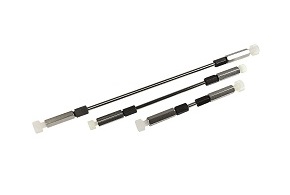
Miniaturisation of liquid chromatography in combination with mass spectrometry has several advantages including improvements in sensitivity, especially at low concentration levels and dramatically reduced solvent consumption, compared to conventional HPLC or UHPLC. With further method optimisation, run times can also be reduced giving further savings in solvent use or time.
To meet the requirements of MicroLC/CapillaryLC/NanoLC YMC offers capillary columns specifically designed to use with the corresponding chromatography systems.
Normal Phase (NP) Columns

Whilst historically it was the earliest form of HPLC, normal phase separations have recently received less attention due to the belief that it is complicated and unpredictable. However, normal phase chromatography is a powerful tool for the separation of positional isomers that are difficult to separate in reversed phase mode. Due to a rigid surface, compared to the more flexible carbon chains of reversed phases, the analytes are influenced by well-defined steric interaction with polar groups. YMC offers columns packed with non-bonded silica or with silica gel modified with polar groups
HILIC Columns
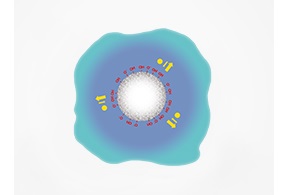
HILIC HPLC/UHPLC columns from YMC are rugged stationary phases which provide improved LC/ESI-MS response, direct SPE solvent compatibility and complementary selectivity to reversed phases. This is important to R&D and drug metabolism scientists since the impurity or metabolite is frequently more polar and present at much lower concentrations than the parent compound. With YMC HILIC columns, these very polar compounds elute later than the higher hydrophobic parent compound, thereby minimizing the MS ion suppression that can occur at the beginning of the chromatogram.
Chiral Columns

YMC offers several solutions for separating chiral compounds with different chiral selectors and different chiral separation mechanisms. The selectors are either coated/immobilised or bonded to the support material which has different pore sizes dependent on the selector. According to the selector chiral chromatography can be performed in NP, RP and/or SFC mode.