
Trajan-SGE

Trajan (former SGE Analytical Science) has long been a manufacturer of GC capillary columns with the complete technology capability to produce the finest capillary columns from beginning to end, including the special requirements of producing the fused silica capillary tubing.
This end-to-end manufacturing capability allows Trajan to control the fabrication process precisely to produce the finest quality capillary columns available.
The individual technologies Trajan employs in GC capillary column manufacture are:
Drawing of the precision fused silica capillary tubing.
Developing and synthesizing the specialty polymer stationary phases.
Performing the specialty chemical treatment of the fused silica surface so that it is inert and compatible for the cross-linked stationary phase.
Coating and cross-linking the polymer stationary phase.
Quality testing of every completed capillary column to rigorous standards.


Trajan (SGE) GC Capillary Column Phases

Phenyl Polysilphenylene Siloxane (Silphenylene substituted Polydimethylsiloxane)

BPX5, BPX35, BPX608, BPX50 Silphenylene phases have become fairly common now with many manufacturers offering at least some phases of this type, SGE has a full range. Phases with the “X” notation have a silphenylene backbone (exception is the BPX1). Phenyl substituted polymers are relatively non-polar and rely for their different functionality on π – bonding with the aromatic phenyl groups. SGE was the first GC capillary column manufacturer to introduce this type of phase commercially in the 1980s with the intention of improving the thermal stability to give higher maximum temperatures and reduced bleed.
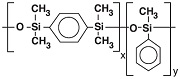
BPX5, BPX35, BPX608, BPX50

Silphenylene phases have become fairly common now with many manufacturers offering at least some phases of this type, SGE has a full range.

Phases with the “X” notation have a silphenylene backbone (exception is the BPX1). Phenyl substituted polymers are relatively non-polar and rely for their different functionality on π – bonding with the aromatic phenyl groups.

SGE was the first GC capillary column manufacturer to introduce this type of phase commercially in the 1980s with the intention of improving the thermal stability to give higher maximum temperatures and reduced bleed.
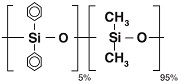
Diphenyl Dimentyl Siloxane (Phenyl substituted Siloxanes)

BP5 The classical 5% phenyl group of phases

BP5

The classical 5% phenyl group of phases

Polysiloxane

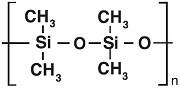
BP1, BP1 PONA, BPX1, SolGel-1ms Polydimethylsiloxane (PDMS) “non-polar” type phases which rely on Van der Waals interactions between molecules and separate primarily based on “boiling point” type separation. Useful chromatographic space is usually considered in terms of modifications to non-polar retention. This is understandable because the GC is useful for volatile compounds and that usually means organics. Organics that can be vaporized are generally high in non-polar (alkane or hydrocarbon) character. It is this part of their surface that allows them to be soluble in a non-polar phase. It is also this characteristic that makes the BP1 (dimethylsiloxane) a universal phase.

BP1, BP1 PONA, BPX1, SolGel-1ms

Polydimethylsiloxane (PDMS) “non-polar” type phases which rely on Van der Waals interactions between molecules and separate primarily based on “boiling point” type separation.

Useful chromatographic space is usually considered in terms of modifications to non-polar retention. This is understandable because the GC is useful for volatile compounds and that usually means organics. Organics that can be vaporized are generally high in non-polar (alkane or hydrocarbon) character. It is this part of their surface that allows them to be soluble in a non-polar phase. It is also this characteristic that makes the BP1 (dimethylsiloxane) a universal phase.