Στήλες GC

Polyethylene Glycol

BP21, BP20, SolGel-WAX™ (PEG) ‘wax’ type phases where the main separation mechanisms are hydrogen bonding or dipole interactions. The wax phases are often considered as ideal for mixtures of chemically different components such as those contained in essential oils.

BP21, BP20, SolGel-WAX™

(PEG) ‘wax’ type phases where the main separation mechanisms are hydrogen bonding or dipole interactions.

The wax phases are often considered as ideal for mixtures of chemically different components such as those contained in essential oils.

Cyanopropyl Polysilphenylene Siloxane

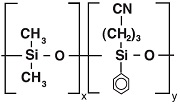
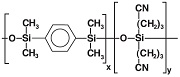
BPX70, BPX90 High cyanopropyl substituted phases, are more difficult to make as efficient, thermally stable phases. BPX70 is equivalent to and behaves like a 70% cyanopropyl siloxane but with siphenyl end substituted backbone for stability which was introduced in 1987 and remained the most polar thermally stable phase for a long time. BPX90 which is equivalent to a 90% cyanopropyl siloxane and stable to 300 °C which is excellent for such a polar phase. The prominent interaction for BPX90 is π – π bonding with the cyano group; the cyano groups become almost entirely responsible for the partitioning.


BPX70, BPX90

High cyanopropyl substituted phases, are more difficult to make as efficient, thermally stable phases.

BPX70 is equivalent to and behaves like a 70% cyanopropyl siloxane but with siphenyl end substituted backbone for stability which was introduced in 1987 and remained the most polar thermally stable phase for a long time.

BPX90 which is equivalent to a 90% cyanopropyl siloxane and stable to 300 °C which is excellent for such a polar phase. The prominent interaction for BPX90 is π – π bonding with the cyano group; the cyano groups become almost entirely responsible for the partitioning.
Cyanopropylphenyl Siloxane

BP225, BP10, BP624, BPX-Volatiles ‘Polar’ phases with <50% cyanopropyl substituted dimethylpolysiloxane.

BP225, BP10, BP624, BPX-Volatiles

‘Polar’ phases with <50% cyanopropyl substituted dimethylpolysiloxane.

Polycarborane Siloxane

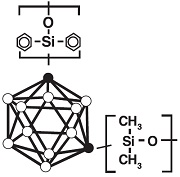
HT5, HT8 The carborane phases were originally developed as very high thermal stability phases for high temperature work to 460 °C. The functionality of the carboranes is diffi cult to explain – they end up with pentavalent bonds with shared sigma bonds rather than π – bonds. The bonds are transient like a benzene with a ball of shared electrons. HT5 and HT8 are low π – bonding purely due to the low concentration of carborane in the polymer, otherwise it would be high.

HT5, HT8

The carborane phases were originally developed as very high thermal stability phases for high temperature work to 460 °C. The functionality of the carboranes is diffi cult to explain – they end up with pentavalent bonds with shared sigma bonds rather than π – bonds. The bonds are transient like a benzene with a ball of shared electrons.

HT5 and HT8 are low π – bonding purely due to the low concentration of carborane in the polymer, otherwise it would be high.

Dramatically increase the speed of your analysis with Thermo Scientific UltraFast UFC GC columns.

Select from our comprehensive portfolio of TracePLOT TG-BOND GC columns for reliable linear and quantitative analyses of a variety of nonpolar and polar compounds.

Use our TraceGOLD TG and TRACE TR GC columns for both general purpose and difficult-to-analyze high polarity separations to produce highly reliable, consistent results.

Find just the mid-polarity column you need from among our extensive portfolio of TraceGOLD TG and TRACE TR columns and achieve exceptionally reliable results.

Choose from our comprehensive portfolio of TraceGOLD TG and TRACE TR GC columns that guarantee reliable, reproducible results for many GC and GC-MS applications.

Push the limits of your analyses and optimize the separation of non-polar compounds with our portfolio of TraceGOLD TG and TRACE TR-1MS columns.

Achieve reliable, reproducible results and ensure the success of your analyses with our comprehensive portfolio of high-performance, application-specific TRACE GC columns.