TOSOH

Discover the extensive family of TSKgel U/HPLC columns. Our portfolio includes a variety of particle sizes and column designs to meet all of your bioseparation needs.

Normal phase and hydrophilic interaction liquid chromatography (HILIC)

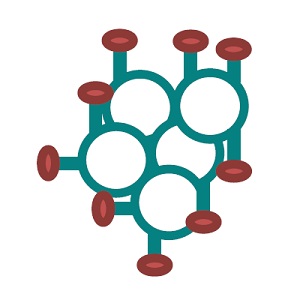
Normal phase and hydrophilic interaction liquid chromatography (HILIC) are primarily used to separate polar and hydrophilic compounds. In reversed phase mode very polar compounds are often not sufficiently retained in low percent organic, or even in 100% aqueous mobile phase. The order of elution in normal phase is opposite that found in reversed phase for the same mixture of compounds. Although non-polar organic mobile phases and a silica stationary phase were used traditionally in normal phase LC, today most separations are performed with aqueous-organic mobile phases and a more polar-bonded stationary phase. This mode of HPLC is now commonly referred to as HILIC, hydrophilic interaction liquid chromatography.

Normal phase and hydrophilic interaction liquid chromatography (HILIC) are primarily used to separate polar and hydrophilic compounds. In reversed phase mode very polar compounds are often not sufficiently retained in low percent organic, or even in 100% aqueous mobile phase. The order of elution in normal phase is opposite that found in reversed phase for the same mixture of compounds. Although non-polar organic mobile phases and a silica stationary phase were used traditionally in normal phase LC, today most separations are performed with aqueous-organic mobile phases and a more polar-bonded stationary phase. This mode of HPLC is now commonly referred to as HILIC, hydrophilic interaction liquid chromatography.

By using an amide or amino bonded phase column, polar compounds can be retained by a normal phase or hydrophilic interaction chromatography retention mechanism. Typical mobile phases in HILIC are aqueous buffers with organic modifiers – primarily acetonitrile.

In contrast to the retention behavior in reversed phase, in HILIC, solutes will be retained longer when increasing the percent acetonitrile.

Typical applications for HILIC are:

Analysis of polyols, carbohydrates, or vitamins
Characterization of protein glycosylation by fluorescence or mass spectrometric detection
Separation of polar peptides, e.g. after enzymatic digestion of proteins (peptide mapping)
Analysis of polar drugs and separation of drug metabolites LC/MS analysis of polar compounds

Reversed Phase Chromatography (RPLC or RPC)

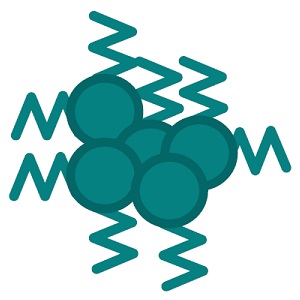
Reversed Phase Chromatography (RPLC or RPC) is the most efficient of all biomolecule separation techniques. It has been the technique of choice for the analysis of small molar mass compounds in both the pharmaceutical and chemical industries, as well as in biomedical research, since the late 1970s. More recently, RPC has become the accepted tool for the separation of peptides, proteins and other biopolymers, making it largely responsible for the widespread popularity of HPLC as a chromatographic technique.

Reversed Phase Chromatography (RPLC or RPC) is the most efficient of all biomolecule separation techniques. It has been the technique of choice for the analysis of small molar mass compounds in both the pharmaceutical and chemical industries, as well as in biomedical research, since the late 1970s. More recently, RPC has become the accepted tool for the separation of peptides, proteins and other biopolymers, making it largely responsible for the widespread popularity of HPLC as a chromatographic technique.

The opposite of normal phase chromatography, RPC requires a non-polar stationary phase and a mobile phase that consists of a mixture of water and polar-solvent mobile phase. The so-called “hydrophobic effect” is the major driving force for retention in RPC. The hydrophobic effect is related to the non-polar surface area of the solute molecule, which varies as a function of mobile phase composition, while the strength of the hydrophobic bond is proportional to the decrease in molecular surface area when the solute associates with the carbon-based stationary phase. Mobile phase additives, such as trifluoroacetic acid, increase protein hydrophobicity by forming ion pairs that strongly adsorb to the stationary phase. Typically, the mobile phase consists of a mixture of water (buffer) and acetonitrile, methanol or, less common, THF, or 2-propanol. The biological molecules are eluted from the chromatographic support by a change in the polarity of the mobile phase.

Silica particles are most commonly used as the support, which then is derivatized with octadecylsilane (ODS). Polymer-based supports have been introduced as an alternative to silica-based reversed phase columns, particularly for analyzing basic compounds in their neutral state at high pH.

RPC columns can be applied to the analysis of a wide variety of compounds, ranging from neutral polar and nonpolar solutes to acidic, basic, and amphoteric compounds. RPC is also an efficient technique for the analysis of derivatized amino acids, peptides and proteins, although protein structure is not always maintained due to the high concentration of organic solvent required for their elution.

Affinity Chromatography (AFC)

Affinity Chromatography (AFC) offers the greatest potential specificity and selectivity for the isolation or purification of biomolecules. Almost all biological molecules can be purified on the basis of a specific interaction between their chemical or biological structure and a suitable affinity ligand. In AFC, the target molecule is specifically and reversibly adsorbed by a complementary ligand and immobilized on a matrix. Examples of a complementary ligand include an inhibitor, substrate analog or cofactor, or an antibody which specifically recognizes the target molecule. The selectivity is often based on spatial recognition, a ‘lock-and-key’ mechanism. The adsorbed molecule is subsequently eluted either by competitive displacement or a conformation change through a shift in pH or ionic strength. Typical molecular pairs are antigens and antibodies, enzymes and coenzymes, and sugars with lectins. Purification of several thousand-fold may be obtained due to the high selectivity of the affinity interactions. Although affinity chromatography is not specific, in that no enzyme interacts with only one substrate, it is the most selective method for separating proteins.

Affinity Chromatography (AFC) offers the greatest potential specificity and selectivity for the isolation or purification of biomolecules. Almost all biological molecules can be purified on the basis of a specific interaction between their chemical or biological structure and a suitable affinity ligand.

In AFC, the target molecule is specifically and reversibly adsorbed by a complementary ligand and immobilized on a matrix. Examples of a complementary ligand include an inhibitor, substrate analog or cofactor, or an antibody which specifically recognizes the target molecule. The selectivity is often based on spatial recognition, a ‘lock-and-key’ mechanism.

The adsorbed molecule is subsequently eluted either by competitive displacement or a conformation change through a shift in pH or ionic strength. Typical molecular pairs are antigens and antibodies, enzymes and coenzymes, and sugars with lectins.

Purification of several thousand-fold may be obtained due to the high selectivity of the affinity interactions. Although affinity chromatography is not specific, in that no enzyme interacts with only one substrate, it is the most selective method for separating proteins.

Hydrophobic interaction chromatography (HIC)

Hydrophobic interaction chromatography (HIC) is based on non-polar interactions that are induced by high salt mobile phases. Stationary phases are similar to reversed phase chromatography (RPC) but the density of functional groups is lower. A weakly non-polar stationary phase is used with an aqueous mobile phase containing a high concentration of a chaotropic salt. The technique is mainly applied to the separation of proteins, which are eluted by decreasing the salt concentration or by adding a low percentage of organic solvent. Although also based on hydrophobic interactions, selectivity in HIC separations is distinctly different from that in reversed phase chromatography. Despite the lower peak capacity in HIC compared to RPC, HIC has the advantage that the mobile phase conditions (primarily aqueous) do not usually disrupt higher-order protein structures. HIC is used in the biopharmaceutical industry for the analysis of antibody drug conjugates (ADCs) or to determine the aggregate content of monoclonal antibodies.

Hydrophobic interaction chromatography (HIC) is based on non-polar interactions that are induced by high salt mobile phases. Stationary phases are similar to reversed phase chromatography (RPC) but the density of functional groups is lower. A weakly non-polar stationary phase is used with an aqueous mobile phase containing a high concentration of a chaotropic salt.

The technique is mainly applied to the separation of proteins, which are eluted by decreasing the salt concentration or by adding a low percentage of organic solvent. Although also based on hydrophobic interactions, selectivity in HIC separations is distinctly different from that in reversed phase chromatography. Despite the lower peak capacity in HIC compared to RPC, HIC has the advantage that the mobile phase conditions (primarily aqueous) do not usually disrupt higher-order protein structures.

HIC is used in the biopharmaceutical industry for the analysis of antibody drug conjugates (ADCs) or to determine the aggregate content of monoclonal antibodies.